Ashwamedha Yagna of Rama Story | Ramayan
This story is an original retelling, written in our own words, inspired by a video from the Tilak YouTube channel.
Ram resolves to perform Ashwamedha Yagna
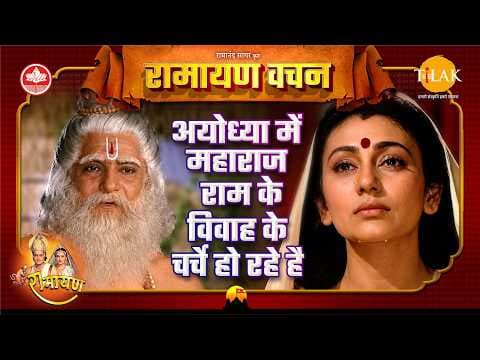
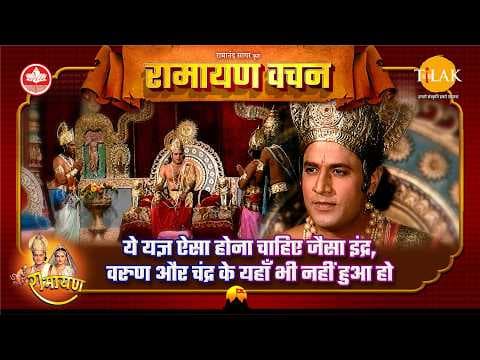
Maharaj Shri Ram, seated on the throne of Ayodhya, dedicated his life to the welfare of his subjects and the establishment of Dharma. He had freed the Earth from terror by slaying Ravana and had also reclaimed his beloved wife, Sita. However, due to the fear of public slander, he had to send Sita into exile, where she gave birth to Luv and Kush at the sage Valmiki's ashram. After Sita's exile, Shri Ram's heart remained deeply troubled. He constantly thought about the welfare of his subjects and the establishment of Dharma. Even while fulfilling his duties as a king, the deep sorrow of separation from Sita resided in his heart. Meanwhile, he decided to further strengthen the establishment of Dharma and justice in his kingdom. He consulted with his guru Vashishtha and other sages about how the welfare of his subjects could be more assured. After much contemplation, he resolved to perform a great sacrifice – the Ashwamedha Yagna. This sacrifice was not only a symbol of his imperial sovereignty but also a means to re-establish Dharma and fully set up a rule of justice. Shri Ram knew that this sacrifice would be extremely difficult and elaborate, with various obstacles possibly arising, but he was determined to remain steadfast in his resolve.
Preparations and Rituals of the Ashwamedha Yagna
The Ashwamedha Yagna is considered one of the most significant and arduous sacrifices in Hinduism. According to its rituals, a powerful and excellent horse is freed from the sacrificial altar and allowed to roam throughout the universe. A military contingent accompanies the horse, protecting it. Any king who stops this horse in his territory must acknowledge the power and valor of the performing king and prepare for battle. If that king is defeated in battle, the horse proceeds. If he is victorious, the sacrifice remains incomplete. Shri Ram consulted with his guru Vashishtha and Maharshi Vishwamitra in detail about the rituals and auspicious timing for this sacrifice. He reviewed the necessary materials, priests, soldiers, and other arrangements required for the Yagna. Preparations for this great sacrifice began in Ayodhya with great fanfare. Auspicious sounds and Vedic chants filled the air. Shri Ram himself oversaw the Yagna, ensuring that every action was performed according to scriptural methods. He selected the purest and most powerful horse for the sacrifice, which was exceptionally radiant and strong. To protect this horse, he appointed his brave soldiers, led by Lakshman himself. The purpose of this sacrifice was not merely a declaration of royal authority, but it was also an effort to establish the supremacy of Dharma and justice in the world order of that era.
The Horse's Journey and Reactions from Various Kingdoms
As soon as the horse selected for the Ashwamedha Yagna was released after proper worship and veneration, it began to roam freely. Accompanying the horse was a mighty army led by Lakshman, deployed for its protection. As the horse passed through various kingdoms, a message reached the kings and rulers that King Shri Ram of Ayodhya was performing a great Ashwamedha Yagna. Most kings respected Shri Ram's power and righteousness and allowed the horse to pass through their territories unhindered. They honored the sanctity of the Yagna and accepted Shri Ram's universal sovereignty. Some kings even hailed Shri Ram's victory and respectfully bid farewell to the horse themselves. However, there were some rulers who viewed their own power and dominance as a challenge. When the horse entered the borders of their kingdoms, they considered it an affront to their prestige. They attempted to stop the horse. Lakshman and his army bravely faced any such resistance and, with their valor, defeated the opponents. Thus, the horse, departing from Ayodhya, roamed far and wide, spreading the fame of Shri Ram's Ashwamedha Yagna in all directions. This journey of the horse was not merely a display of a king's power but a significant step towards establishing Dharma and righteousness in that period, symbolizing Shri Ram's ideal governance.
Arrival of the Horse at Valmiki's Ashram and the Story of Luv-Kush
The sacred horse of the Ashwamedha Yajna, while roaming, finally reached near the ashram of Sage Valmiki. At that time, Maharishi Valmiki, a knower of the Vedas and Vedangas, was residing in the ashram with his disciples. Sita's sons, Luv and Kush, were also receiving their education in the Gurukul at the ashram. They were extremely radiant, valiant, and proficient in scriptural knowledge. When the sages and students of the ashram saw the divine horse, they were astonished. Seeing the army of Ayodhya behind the horse, led by Lakshmana, they understood that this was the horse of a royal sacrifice. Luv and Kush, known since childhood for their valor and wisdom, were not perturbed by seeing the horse. They asked their guru, Maharishi Valmiki, if they could stop this horse. Maharishi Valmiki explained the ordinance of the Ashwamedha Yajna to them and said that if they wished, they could do so to protect dharma and demonstrate their bravery. Hearing this, Luv and Kush became very enthusiastic. Taking permission from their guru, they stopped the horse without any fear. They challenged Lakshmana and his army, saying that if Shri Ram wished to complete the yajna, he would have to show the courage to stop this horse. Thus, to protect dharma and justice, two young boys decided to face the mighty army of Ayodhya.
The Battle Between Luv-Kush and Lakshmana
When Luv and Kush stopped the horse near Valmiki's ashram, Lakshmana was reminded of his youth. He saw a remarkable radiance and valor even in the childlike behavior of Luv and Kush. Lakshmana tried to explain to them not to obstruct Shri Ram's yajna, but Luv and Kush remained firm in their resolve for dharma and bravery. They said they did not know who Shri Ram was, and they would not let any king's horse pass without a fight. There was neither fear nor arrogance in their words, only devotion to dharma and respect for their guru. Lakshmana ordered his soldiers to prepare for battle. Luv and Kush, though boys, were proficient in the divine weapons and martial arts bestowed by Maharishi Valmiki. The battle began from both sides. Luv and Kush displayed their extraordinary bravery and valor. They shook Lakshmana's army with their arrows. Lakshmana himself was astonished by their bravery. He first tried to reason with them, but when Luv and Kush remained resolute, Lakshmana also had to fight. He confronted Luv and Kush with his valor. This battle was extremely fierce, in which the warriors on both sides displayed their strength. Luv and Kush, with their youthful energy and exceptional skill, defeated Lakshmana's army, and eventually, Lakshmana himself had to bow before their prowess.
Shri Ram's Arrival at the Ashram and the Revelation of Sita's Secret
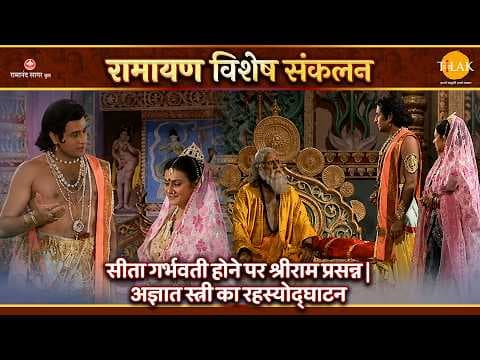
When Lakshmana could not bring back the horse and received the news of his defeat at the hands of Luv-Kush, Shri Ram became extremely worried. He decided to go himself to the place where the horse had been stopped. When Shri Ram arrived at Sage Valmiki's ashram with his ministers and army, he saw that the same two radiant boys were holding the horse. Maharishi Valmiki was also present there. Seeing the radiance and valor of those boys, Shri Ram blessed them. Luv and Kush told Shri Ram that they would not let the horse go until Shri Ram himself fought them. Hearing their words, Shri Ram felt a paternal affection for his sons. Meanwhile, Sita also arrived there, having heard the news of her sons' and Shri Ram's arrival. When Sita saw Shri Ram, her sorrow intensified. Luv and Kush also saw their mother and went to her. Maharishi Valmiki then revealed the secret of Luv and Kush's birth to Shri Ram. He explained that these two were his sons and had been born from Sita's womb. He narrated the entire account of Sita's exile and her upbringing of these children to Shri Ram. Shri Ram repented his actions and was overjoyed to reunite with Sita. He recognized Luv and Kush and embraced them. Thus, the incident of the Ashwamedha Yajna led to the revelation of Sita and her sons' secret.
Sita's Trial by Fire and Shri Ram's Decision
Even after the revelation of Lava and Kush's birth, doubt lingered in Shri Ram's mind regarding Sita. Although he knew Sita was innocent, he was disturbed by public criticism and societal opinions. He urged Sita to undergo a trial by fire once more to prove her purity and truthfulness. Sita, who had been hoping for Shri Ram's love and trust, was deeply hurt by his insistence. She took an oath of her purity, with the fire as her witness. As Sita began to enter the fire, Agni Dev himself appeared from the heavens. Agni Dev lifted Sita into his lap, brought her out, and told Shri Ram that Sita was entirely pure and blameless. He also informed Shri Ram that Sita had sanctified everyone with her character and penance during her exile. Even after Agni Dev's testimony, Shri Ram, mindful of societal norms and his subjects' sentiments, did not permit Sita to return to Ayodhya with him. He stated that he knew Sita was innocent, but re-establishing her in the eyes of society would be extremely difficult. Sita, who had undergone such a great ordeal for her honor and purity, was deeply pained by Shri Ram's decision. She prayed to Mother Earth to take her into her embrace, and Mother Earth did so, engulfing her within her womb. Thus, Sita's end was deeply tragic, leaving an indelible mark on Shri Ram's heart.
Conclusion of the Yajna and Shri Ram's Remorse
After Sita merged with the Earth, Shri Ram's heart became extremely heavy. He resolved to complete the Ashwamedha Yajna, but his mind was filled with sorrow over Sita's separation and remorse for his decision. The remaining rituals of the yajna were completed, and the Ashwamedha Yajna concluded. Although the yajna was fulfilled, Shri Ram's mind found no peace. He constantly remembered Sita and reflected on his actions. He felt profound grief that out of fear of public slander, he had rejected his beloved wife, who had proven her purity until her last moments. After the yajna, Shri Ram decided he would entrust the kingdom's responsibilities to his brothers and retire to the forest. However, his ministers and Guru Vashishtha explained that this decision would be against the welfare of his subjects. Shri Ram then declared his sons Lava and Kush as the heirs to the throne, and he himself continued to govern the kingdom, but his heart remained perpetually immersed in the memory of Sita. This Ashwamedha Yajna, performed to establish dharma and justice, ultimately became a cause of immense personal sorrow and regret for Shri Ram. It also demonstrated that while a king has duties and responsibilities, the importance of emotions and love in personal life should never be neglected.
Spiritual Significance of the Ashwamedha Yajna
The Ashwamedha Yajna was not merely a royal ritual but held deep spiritual and ethical significance. This yajna symbolized the king's universal authority, righteousness, and his responsibility towards his subjects. The horse's journey conveyed the message of establishing dharma and justice throughout the world. Shri Ram's performance of this yajna illustrates the efforts a ruler must undertake to maintain good governance, peace, and prosperity in his kingdom. This yajna also symbolizes the conquest of the senses. Just as the horse is released without any restraint, similarly, a person should keep their desires and senses under control. If the senses become uncontrolled, they can lead an individual astray from the right path, just as an unbridled horse can wander off course. Lava and Kush stopping the horse signifies that one should not shy away from facing any challenge to protect truth and dharma, no matter how great it may be. Sita's trial by fire and her return to the Earth teach us that the path of truth and purity is arduous, but a soul that is pure ultimately attains respect and liberation. This episode teaches us that actions inevitably yield consequences, and a king must maintain a sense of justice and compassion in his personal life alongside the welfare of his subjects. Shri Ram's remorse teaches us that we should reflect on our decisions and have the courage to admit any mistakes made.
Conclusion: The Confluence of Dharma, Karma, and Remorse
The Ashwamedha Yagna of Shri Ram, the king of Ayodhya, was an extremely significant and historical event. This yagna was not only a testament to Shri Ram's valor and righteousness but also marked the beginning of a deeply poignant and sorrowful chapter in his life. Through this yagna, Shri Ram attempted to re-establish dharma in his kingdom; however, it was during this very yagna that he had to lose his beloved wife, Sita. The birth of Luv and Kush, their battle, Sita's ordeal by fire, and ultimately her merging with the Earth – all these events were deeply connected to the Ashwamedha Yagna. This entire narrative depicts the adherence to dharma, the consequences of actions (karma), and the balance between a king's personal and public life. Shri Ram's remorse teaches us that no individual, however great, is immune to their mistakes. However, accepting one's actions and learning from them is life's greatest achievement. This story tells us that while it is essential to walk the path of truth, justice, and dharma, we must also maintain love and compassion for our loved ones along this path. Shri Ram's life conveys the message that to become an ideal king, it is important to respect human emotions alongside devotion to duty.
Frequently Asked Questions
Why is the Ashwamedha Yagna performed?+
The Ashwamedha Yagna is performed to establish a king's universal authority, righteousness, and the welfare of his subjects. It also symbolizes the conquest of the senses and the re-establishment of Dharma.
Who were Luv and Kush?+
Luv and Kush were the sons of Lord Shri Ram and Goddess Sita, raised in the ashram of Maharshi Valmiki. They were exceptionally powerful, learned, and valiant warriors.
Why did Sita undergo the trial by fire?+
Due to the slander spread in society, Sita had to undergo the trial by fire to prove her purity and truthfulness. Agni himself testified to her innocence.
Why did Shri Ram not accept Sita back?+
Shri Ram knew his wife's purity, but due to societal perception and fear of public condemnation, he did not permit Sita to return to Ayodhya, which caused him deep remorse.