Why did Banasur Reject Balaram's Marriage Proposal?
This story is an original retelling, written in our own words, inspired by a video from the Tilak YouTube channel.
Description of Lord Krishna's Leelas
In Indian culture, mythological tales hold a precious place, not only entertaining us but also enlightening us about life's profound mysteries and moral values. Among these, the description of Lord Krishna's leelas, or divine plays, is particularly special, narrating incredible events from his childhood through every stage of his life. These leelas serve as a source of inspiration for devotees, showcasing the importance of love, valor, and surrender. Each leela of Krishna carries a deep meaning, offering a positive perspective on life. Through these divine plays, we understand devotion, friendship, and the conflict between dharma and adharma, learning how the divine always ensures the well-being of His devotees.
Banasur and His Ego
In ancient times, there was a mighty demon king named Banasur, ruler of Mahishmati. Banasur was incredibly strong and powerful, but his greatest weakness was his ego. Being a devoted follower of Lord Shiva, he had received boons of invincibility, which made him even more arrogant. Intoxicated by his strength and boons, Banasur established his dominance across the three worlds, striking fear even into the hearts of the gods. Misusing his power, he caused widespread chaos and terrorized everyone. This ego led him to frequently insult others and consider no one his equal in strength. His capital, Shonitpur, became a symbol of his might and cruelty, where the populace lived in constant fear. This immense power and ego of Banasur were destined to become the cause of his downfall.
Balaram's Marriage Proposal
Once upon a time, Banasur, the king of demons, began searching for a suitable groom for his daughter, Usha. Usha was an exceptionally beautiful and virtuous maiden, and Banasur desired a groom who could uphold the honor of his lineage. Meanwhile, Balaram, the elder brother of Lord Krishna, arrived amidst the demons with a marriage proposal. He presented Banasur with a request for the hand of Aniruddha, his nephew. Aniruddha was the grandson of Lord Krishna and was also known for his great valor and radiance. Balaram's intention was that if this marriage were to take place, peace could be established between the demons and the Yadavas, and the ego of the demons could also be somewhat humbled. He explained to Banasur that Aniruddha was a brilliant jewel of their lineage and would prove to be an ideal husband for Usha, thereby strengthening the ties between both clans.
Banaasur's Arrogance and Rejection
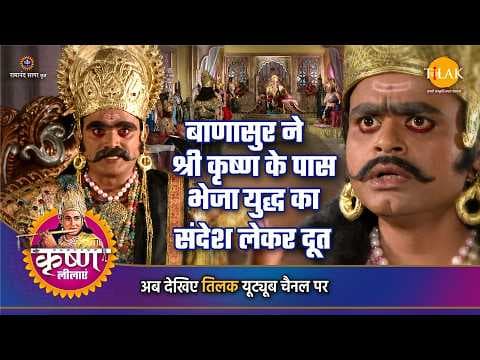
When Balaram requested the hand of Usha for his nephew, Aniruddha, in the presence of Banaasur, Banaasur's arrogance was awakened. Considering himself the lord of the three worlds and a supreme devotee of Lord Shiva, he deemed the Yadavas inferior to himself. It was unacceptable to him that his daughter should be married into a lineage he considered lesser than his own. He rejected Balaram's proposal, stating that the Yadavas were insignificant compared to his might, and he would only marry his daughter to a Kshatriya, not a common dweller of Gokul. Banaasur insulted Balaram and rudely dismissed him. This rejection further fueled Banaasur's ego, and he considered it an insult to his entire clan. He failed to realize whom he was speaking to, and his actions were an invitation to his own destruction.
Balaram's Anger and Warning
Balaram became extremely angered by Banaasur's insulting behavior and arrogance. He made a great effort to explain to Banaasur that his proposal was merely a friendly initiative, aimed at establishing harmony between both sides. Balaram also warned Banaasur about the dire consequences of his arrogance. He stated that due to his ego, Banaasur was not only putting the Yadavas but also himself into great danger. Balaram reminded him that the source of the Yadavas' strength was Lord Shri Krishna himself, and insulting them would prove suicidal. Balaram explained to Banaasur that this marriage would not only be auspicious for Usha's future but would also bring welfare to the Daitya clan. He said that without divine grace, no one's prowess is permanent, and ego is the greatest enemy.
Balaram's Departure for Dwarka
Distressed by Banaasur's arrogant rejection and insulting words, Balaram decided to return to Dwarka. He knew that Banaasur would not relent from his course of action, and his ego would lead him to destruction. Instead of cursing or immediately punishing Banaasur, Balaram left the situation to Shri Krishna's discretion. He quietly departed from Shonitpur and proceeded towards his kingdom, Dwarka. He felt a sense of pity for Banaasur, as he knew Banaasur's ego would be his undoing. Balaram thought that Shri Krishna himself would make the appropriate decision on this matter and that Banaasur would surely face the consequences of his actions.
Usha's Love and Aniruddha's Abduction
After Balarama's return, Banasura arranged his daughter Usha's marriage elsewhere. However, Usha's heart belonged only to Aniruddha. Some time earlier, when Aniruddha had gone somewhere outside of Dwarka, he coincidentally reached Banasura's capital, Sonitpur. There he met Usha, and the two fell in love. Usha's friend, Chitralekha, played a significant role in this love affair, having brought Aniruddha to Sonitpur to meet Usha. When Banasura learned of this romance, he became extremely enraged. Citing his pride and the honor of his lineage, he captured Aniruddha and imprisoned him. Banasura's act insulted the Yadu dynasty and brought a crisis upon Shri Krishna's family.
Shri Krishna and Balarama's Fury
When Shri Krishna received the news of his grandson Aniruddha's abduction and the insult inflicted by Banasura, both he and Balarama became exceedingly angry. Shri Krishna resolved not to tolerate Banasura's arrogance and the injustice he had committed. Balarama also recalled the rejection of his marriage proposal and Banasura's haughty behavior. The two brothers resolved to punish Banasura for his pride. On Shri Krishna's command, the Yadu army set off towards Sonitpur. The main objective of this war was to liberate Aniruddha and shatter Banasura's arrogance, so that no one would dare to attempt such a recklessness in the future.
Banasura's End and Aniruddha-Usha's Marriage
In the war, Banasura used all his weapons and the boons granted by Lord Shiva, but he could not withstand the might of Shri Krishna and Balarama. Shri Krishna severed many of Banasura's arms with his Sudarshana Chakra and defeated him. Finally, Banasura realized his mistake and sought help from Lord Shiva. Lord Shiva saved Banasura, but even he could not do much against Shri Krishna's brilliance. Shri Krishna granted Banasura his forgiveness but warned him against such actions in the future. Aniruddha was freed, and Shri Krishna himself solemnized the marriage of Banasura's daughter Usha with Aniruddha. Thus, Shri Krishna not only rescued his grandson but also ended Banasura's pride and established peace between the two lineages. This divine play teaches us that pride inevitably meets its end, and God surely protects his devotees.
Frequently Asked Questions
Who was Banasur?+
Banasur was an extremely powerful and arrogant demon king, a devout worshipper of Lord Shiva. He was intoxicated by his might and caused atrocities across the three worlds.
What proposal did Balaram make to Banasur?+
Balaram proposed marriage between his nephew, Aniruddha, who was also Lord Krishna's grandson, and Banasur's daughter, Usha. The aim was to establish peace between the two clans.
Why did Banasur reject Balaram's proposal?+
Banasur rejected Balaram's proposal due to his immense ego. He considered the Yadavas inferior to himself and could not accept his daughter marrying them.
What is the moral message of this divine play?+
This leela teaches that the end of ego is certain and that the divine protects His devotees. Devotion and humility lead to lasting happiness, while ego brings destruction.